
Jerry — Finding Your Light
We like to believe resilience arrives with a single brave moment, a decisive choice to change, a clean break from the past. But for most people, healing isn’t an event at all. It’s a long, stubborn apprenticeship to hope, shaped by small steps, daily routines, and the steady presence of others who don’t give up. For nearly thirty years, that slow, patient work has unfolded for Jerry inside the walls of Shamrock Club.

He first walked in during a time when life felt like it was collapsing faster than he could stand back up. “Back then, I was bouncing around everywhere, streets, shelters, whatever family couch wasn’t full,” he says. “My head was a mess, my habits were worse, and I didn’t think I had much left in the tank, to be honest. I was lost, man. Real lost.”
Shamrock Club didn’t change everything overnight. It wasn’t meant to. As Catholic Charities’ ministry St. Patrick Center’s oldest and longest-running program, its strength lies not in quick fixes but in long-haul companionship, intensive case management, outpatient support, daily meals, a place to rest, and a community built of people who understand the slow work of healing because they live it too.
“When I first came here,” Jerry says, “I didn’t trust nobody. I’d come in for food, keep my head down, dip right back out. But somehow… I kept coming.” He laughs. “It’s funny how a place can get under your skin without you even noticing.”

One of the first people to see him clearly was Ann, his original caseworker, a woman he still calls “my rock.” He talks about her with the kind of reverence reserved for someone who helped reroute the entire direction of many lives.
“Ann would look at me like she saw something I didn’t,” he says. “She’d say, ‘You’re not done yet. You hear me?’ And she’d mean it. Nobody ever talked to me like that before, like I was in trouble.”
That belief met him again and again, especially on the days when Jerry stumbled. “I’d fall back sometimes,” he says. “Slip into old stuff. And I’d be scared to come back in here ’cause I figured I disappointed everybody. But Ann? Man, she’d just go, ‘Alright. You made it back. Let’s go from here.’ No lecture, no shame. Just… let’s keep going.”
That kind of dignity is its own form of treatment, one that can’t be prescribed or charted. It’s something learned only by showing up for people for decades.
“I ain’t the same man I was then,” Jerry says. “I don’t do those bad habits anymore. My mind’s steadier. But that didn’t just happen ’cause I woke up one morning different. It happened ’cause people here kept helping me get there. Case managers, folks in the groups, even other clients. You learn from everybody.”
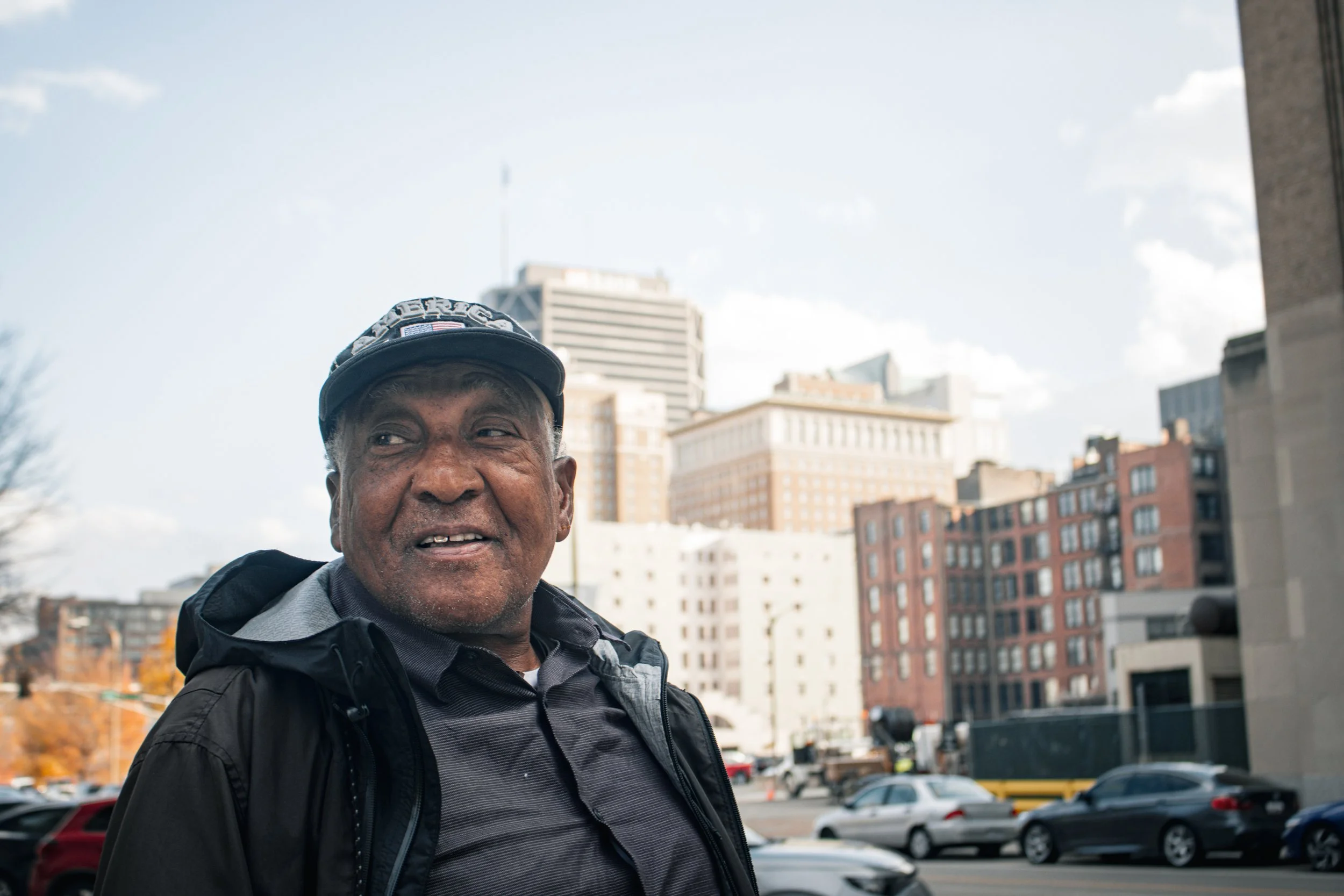
Today, Jerry has a place of his own, a milestone he once thought he’d never reach. But he still spends most days at Shamrock Club. Stability doesn’t erase struggle; it makes it manageable.
“I got my own place now, yeah,” he says, “but some days still hit hard. You wake up and the world just feels heavy. So I come here, grab a meal, talk to people. It resets me. Keeps me moving. This place… it gives me balanced days. I need that.”
And now, after nearly three decades, Jerry’s part of the daily rhythm of the place. Staff know him, clients know him, and everyone knows he’ll pitch in without being asked, grabbing a broom, helping set up chairs for group, pointing someone to the right office. “I just try to help keep things moving,” he says with a shrug. “Ain’t nothin’ fancy. It’s just what you do when a place has held you up this long.”

He’s also quick to look out for people in ways that come naturally to him. “Sometimes a new guy comes in looking all confused,” he says. “So I’ll be like, ‘Hey man, that’s over there, coffee’s over there, lunch is at noon.’ Normal stuff. But when you’re new, simple stuff feels big. I remember that.”
He even attends meditation group now, something he never imagined. “If you told me thirty years ago I’d be doing meditation,” he says, shaking his head, “I’d think you were nuts. But it slows me down. Helps me breathe. Teaches me new stuff. And that’s the thing, you’re never too old to learn something new about yourself.”
That’s the ethos of Shamrock Club: not just sobriety, not just housing, but a way of growing into yourself with the help of a community that holds you through the decades-long process of becoming whole. A place where someone like Jerry can arrive broken and, little by little, rebuild.
“This place ain’t magic,” he says. “I tell people this is a real opportunity, but you gotta show up. But when you can’t show up for yourself, somebody here shows up for you. That’s why I’m still standing. That’s why I’m still learning. Nearly thirty years, and I’m still growing. That’s wild, ain’t it?”
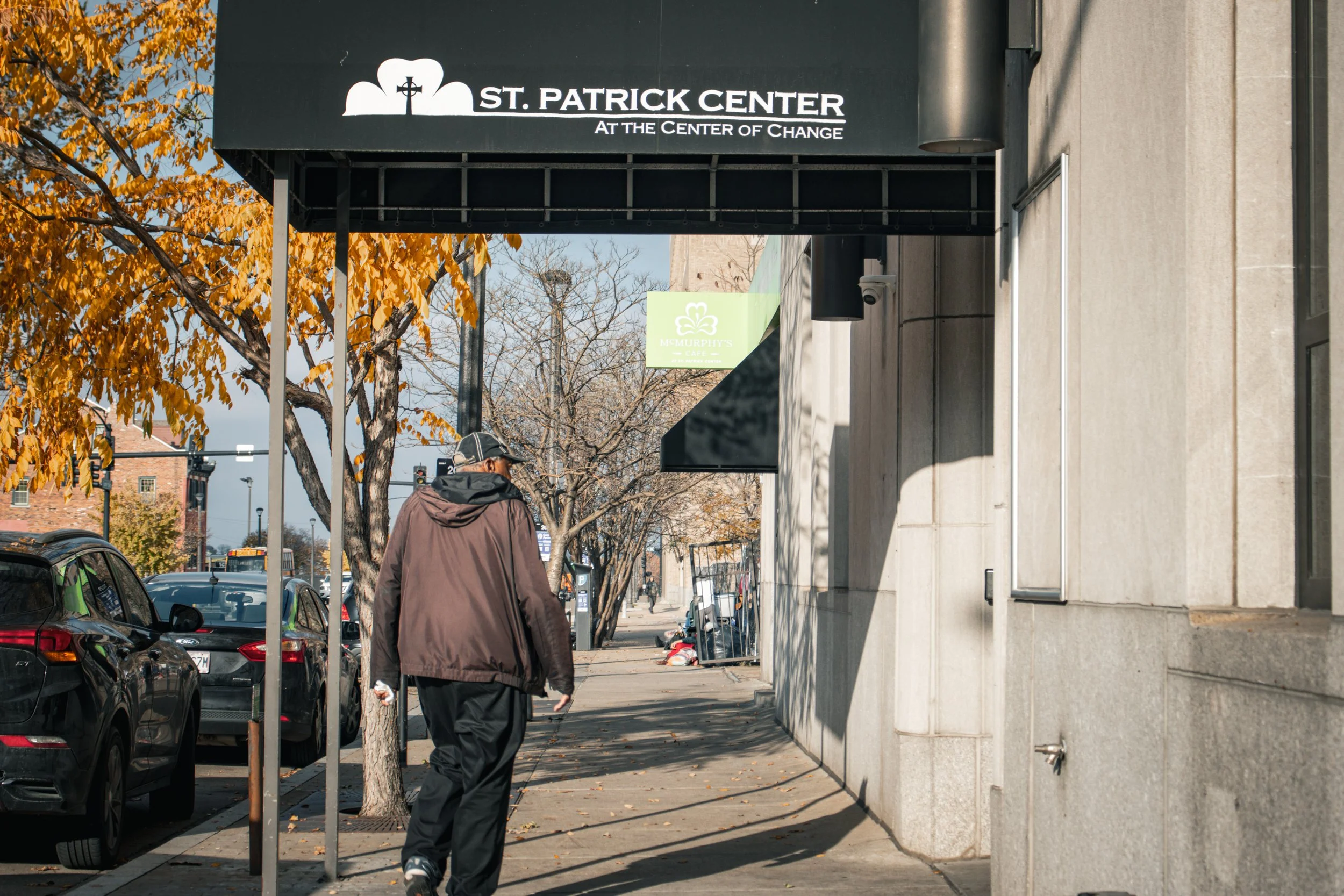
He looks around the room, the hum of lunchtime conversation, the smell of hot food, people he’s known for years mixing with people who are walking in for the first time, scared and tired and hoping for a break.
“Truth is,” Jerry says, “I’m still on my journey. I ain’t done yet. But at least now I know I don’t have to walk it alone.”
Healing, in the end, is rarely a straight line. Sometimes it looks like a man in his later years, laughing with friends, sweeping a familiar floor, drinking his coffee slowly, learning, one day at a time, that the light he was searching for was already growing around him.